Javaabu CEO Mohamed Jailam Joins CDAI 2026 Panel on Building a Responsible AI-Powered Future
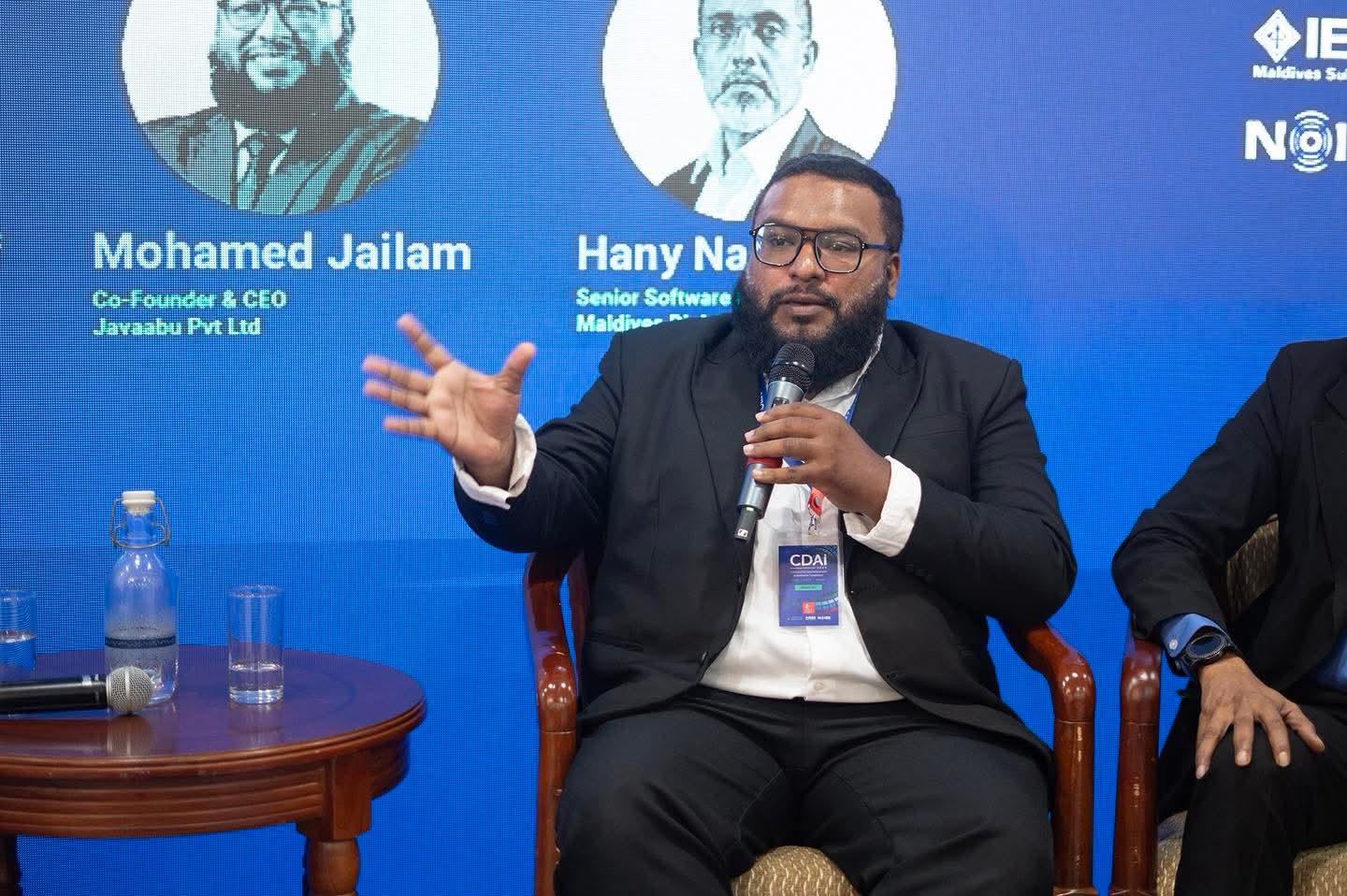
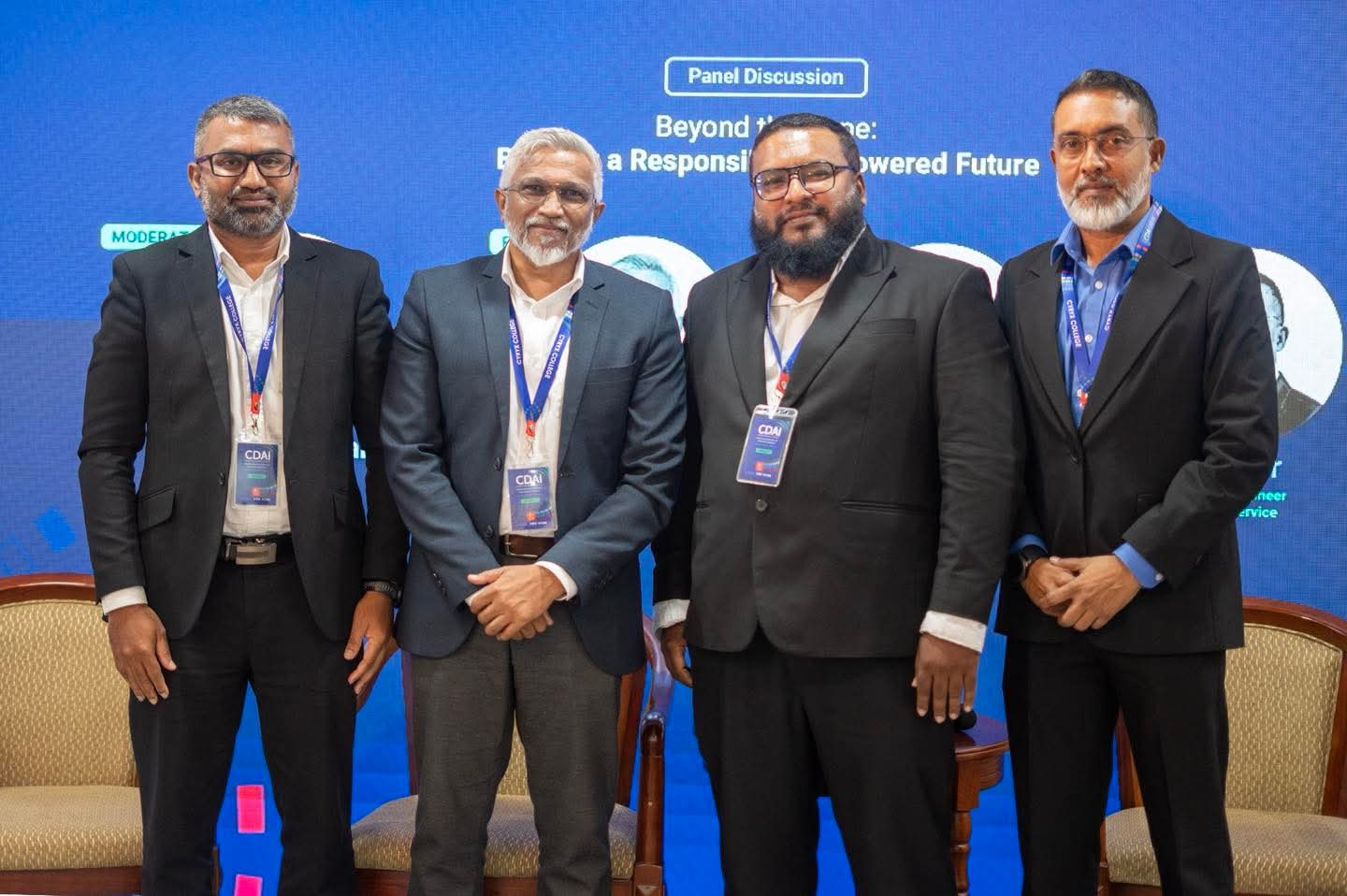
Mohamed Jailam, Co-Founder and CEO of Javaabu, participated in a panel discussion titled “Beyond the Hype: Building a Responsible AI-Powered Future” at the Cybersecurity, Data Science and AI Innovation Symposium (CDAI 2026), held on 31 October 2026 in the Maldives. The discussion explored the practical adoption of artificial intelligence, responsible governance, workforce transformation, and the future of AI development in the country.
Organised by Cyryx College, CDAI 2026 brought together technology professionals, academics, students, and industry representatives to exchange knowledge and explore emerging developments in cybersecurity, data science, and artificial intelligence. The symposium featured the involvement of the IEEE Maldives Subsection, the National Cyber Security Agency, and Noize Events.
Under the theme “Secure. Analyse. Innovate.”, the event provided a platform for discussions on strengthening the Maldives’ technological capabilities, encouraging innovation, and preparing institutions and individuals for an increasingly digital future.
The panel was moderated by Dr. Ibrahim Waheed, Founder and Chair of the IEEE Maldives Subsection, and featured Mohamed Shareef, Senior Advisor for Digital Transformation at Nexia Maldives, Mohamed Jailam, and Hany Nasyr, Senior Software Engineer at Maldives Digital Service.
During the discussion, Jailam highlighted the importance of identifying practical applications of AI that can improve efficiency while preserving human judgement and accountability. He explained that repetitive information-processing tasks, such as transcribing meetings, preparing documents, and processing attendance records for payroll, can already be automated using AI technologies.
Drawing on his previous experience at the Employment Tribunal, Jailam recalled the time-consuming process of manually transcribing recorded hearings, noting how such work could now be significantly accelerated through AI-powered transcription. However, he emphasised that decisions involving legal consequences, penalties, or other matters requiring human judgement must remain subject to human oversight.
Jailam also called for clearer government policies and regulatory frameworks defining where AI can be used independently and where human verification is required. He stressed that organisations and individuals must remain accountable for decisions made with AI assistance rather than shifting responsibility to the technology when mistakes occur.
A significant part of Jailam’s contribution focused on the challenges of developing AI technologies for the Dhivehi language. Drawing from Javaabu’s experience developing DhivehiGPT, he explained that the availability and quality of training data remain among the biggest obstacles to building reliable local AI models.
He shared Javaabu’s experience developing an automatic speech recognition model using recordings and transcripts obtained from the People’s Majlis. Although the material had already been manually transcribed, inconsistencies between the recordings and written transcripts required extensive correction. Javaabu spent approximately six months preparing and aligning the data to make it suitable for AI training.
Jailam also highlighted the limited availability of datasets representing different Dhivehi dialects. Recalling discussions with the Fuvahmulah City Council, he explained that the shortage of written and recorded material in local dialects makes it difficult to develop AI systems capable of understanding and generating those variations of the language.
Addressing the financial and technical challenges faced by smaller organisations, Jailam explained how Javaabu makes use of existing open-source AI models and cloud computing resources to develop specialised Dhivehi models without the enormous investment required to build foundational models from scratch. He encouraged organisations with limited resources to focus on collecting and cleaning relevant data, fine-tuning existing models, and evaluating their performance through benchmarks.
The discussion also examined the impact of AI on employment. Jailam observed that increasingly capable AI systems and advances in robotics could automate a wide range of tasks and occupations in the coming years. He emphasised the need for government intervention and appropriate safeguards to ensure that critical professions, including healthcare and other areas requiring human responsibility, continue to maintain meaningful human involvement.
Looking ahead to 2030, Jailam identified the development of advanced Dhivehi AI models as one of the most important opportunities the Maldives must not miss. He expressed concern that younger generations could increasingly move away from Dhivehi if modern digital tools and AI services remain significantly more capable in English than in their native language.
He explained that this concern was among the motivations behind creating DhivehiGPT, with the aim of making AI-powered services such as writing, summarisation, translation, and transcription accessible in Dhivehi. He also highlighted the risks of relying entirely on international AI models whose Dhivehi capabilities may vary significantly between versions, particularly when the language is not officially supported.
Jailam advocated for greater collaboration and investment from the government, universities, and technology organisations to develop a national Dhivehi AI model. He outlined a vision for a freely available, open-source model capable of supporting advanced applications such as text generation, translation, and optical character recognition, enabling developers and institutions across the country to build digital services with comprehensive Dhivehi support.
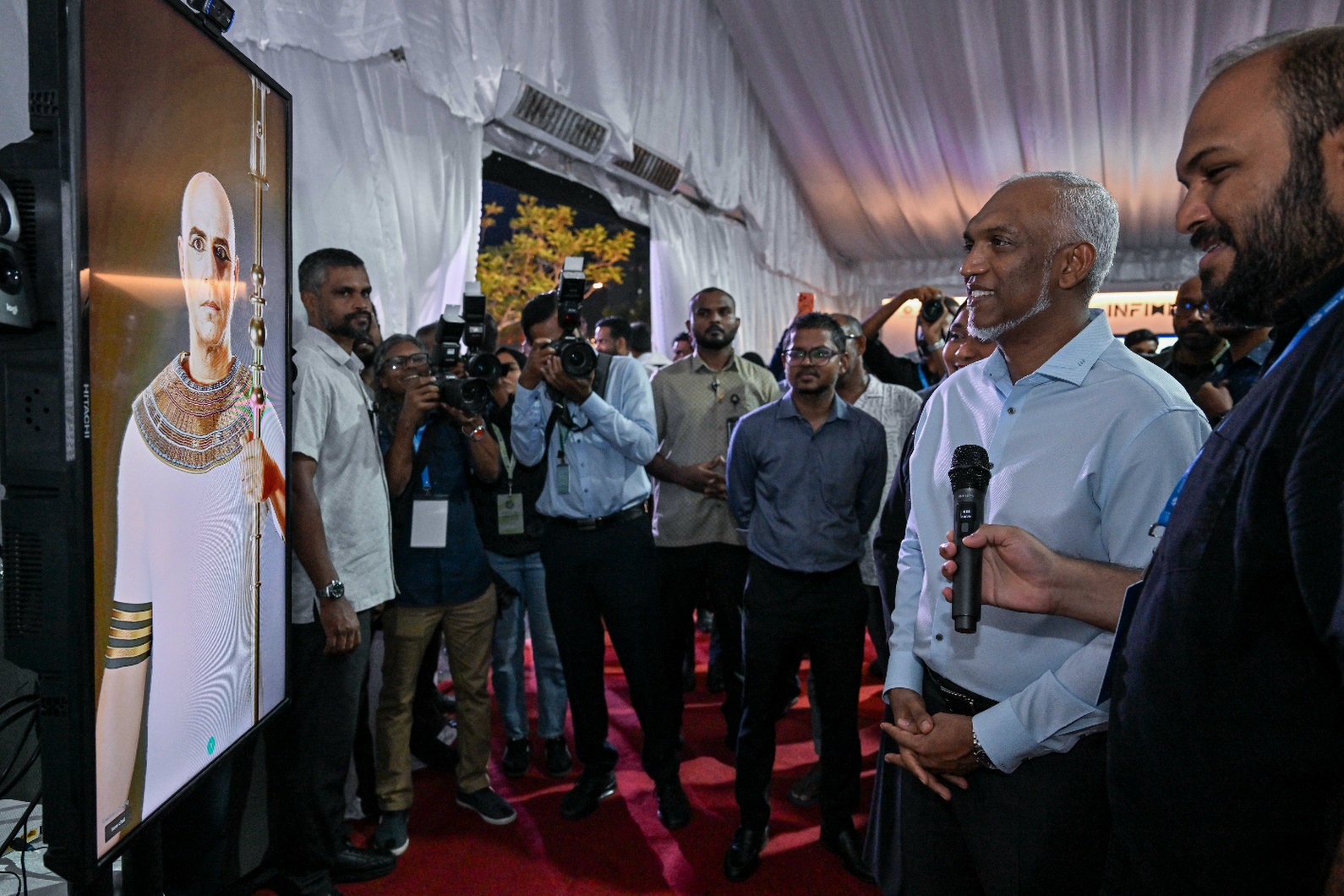
His remarks build on Javaabu’s ongoing efforts to advance Dhivehi AI technologies. The company recently launched an upgraded Dhivehi OCR model and received two awards at Maldives Expo 2026 for its work on DhivehiGPT and Dhivehi Vaahaka.
In the concluding discussion on education, Jailam encouraged educators to place greater emphasis on practical skills, critical thinking, communication, and the ability to work productively with AI. Rather than focusing primarily on memorising facts, he suggested that students should learn to develop ideas, build solutions, present their work, and complete complex projects using modern tools. He also called for more practical assessments that reflect how AI is transforming real-world workplaces.
The panel concluded with a shared emphasis on ensuring that artificial intelligence delivers meaningful benefits to society while addressing the ethical, technical, and economic challenges associated with its adoption.
Javaabu extends its appreciation to Cyryx College and the event collaborators for organising CDAI 2026 and providing an opportunity to contribute to important conversations on responsible AI adoption, innovation, and the future of technology in the Maldives.
Read More